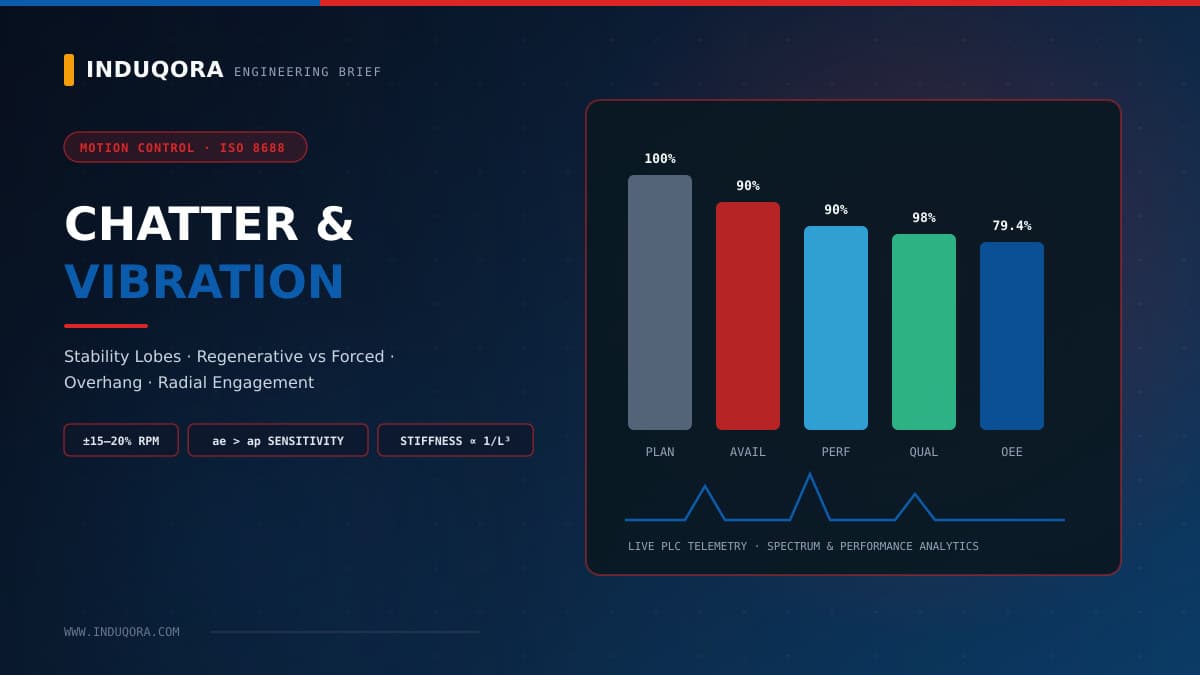
Chatter is not a machine defect and not a tooling defect: it is a resonance that appears only at certain combinations of spindle speed and depth of cut. That is why slowing down often makes it worse, and why the fix is usually a different speed rather than a gentler cut.
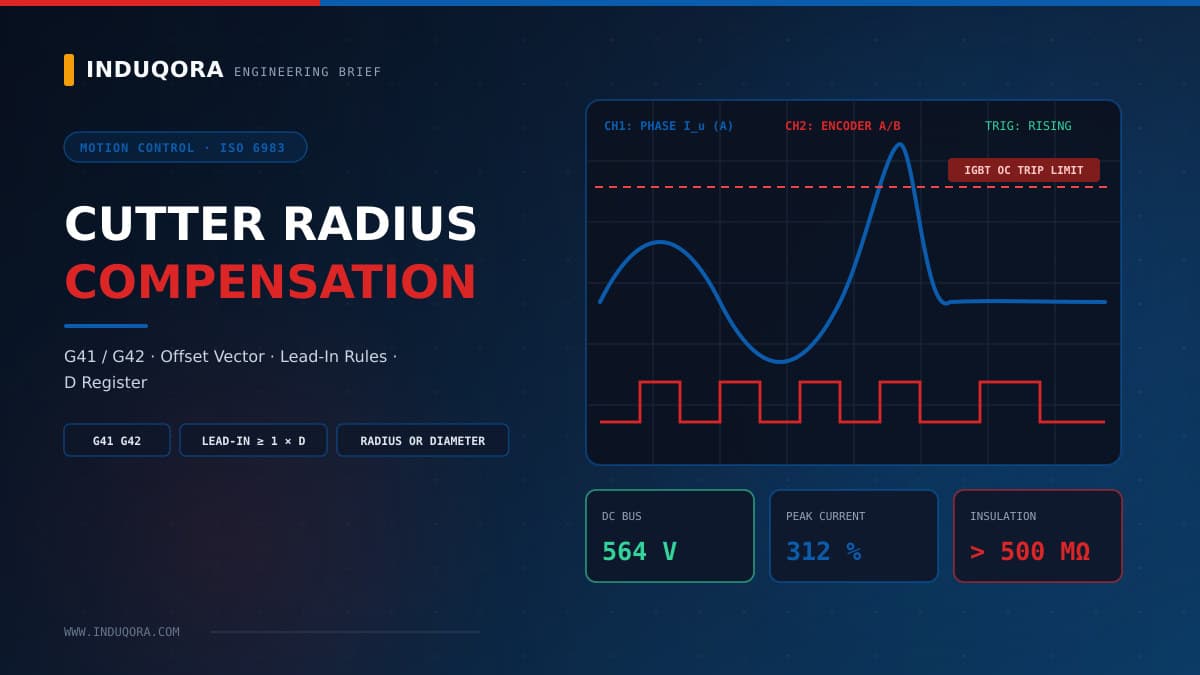
Cutter radius compensation is the feature that most often turns a proven program into a scrapped part, because the control computes the tool path geometrically from a lead-in move the programmer never considered. This guide covers the offset vector, lead-in rules, D-register values and the gouge alarms that reveal a real error.
Most cycle time reduction programmes start with faster feeds and end with scrap. The productive gains are in non-cutting time, chip load per tooth, and radial engagement — in that order, and each has a specific limit.
Fixture rigidity and clamping repeatability decide whether a machine's accuracy reaches the part. This guide covers locating principles, zero-point clamping systems, clamping force effects and the measurement that shows whether a fixture is the limiting factor.
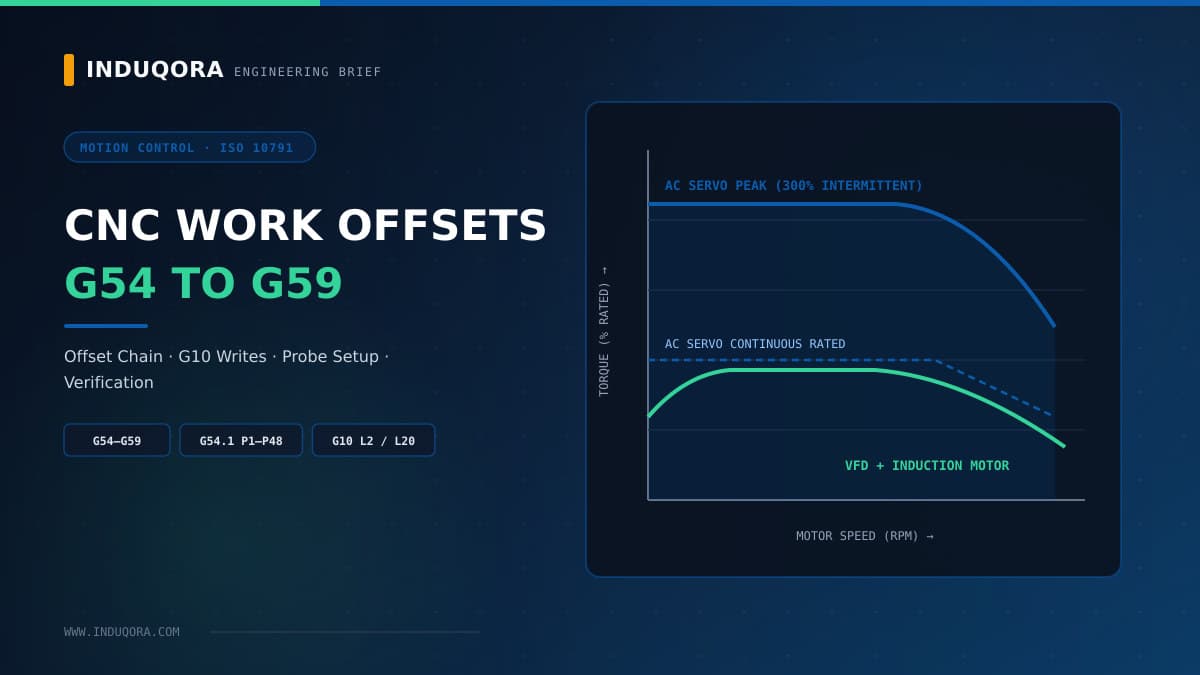
Work offsets decide where the part is, and every scrap event starts with a coordinate system that was not what the program assumed. This guide covers the offset chain from machine zero to tool tip, G54–G59 and G54.1, G10 writes, and probe-driven setup.
A machine that reaches programmed feed on a straight move can still round every corner and overshoot every small arc. The cause is usually acceleration planning, block processing time and jerk limits — not servo gain. This guide explains how look-ahead works and which parameters actually control corner accuracy.
Five-axis work fails in ways three-axis work never does: the tool tip moves when you rotate, rotary axes reach singularities where no feed rate can help, and the post-processor can be wrong in ways that only appear on the machine. This guide covers RTCP kinematics, the singular point, and how to verify a post before it cuts metal.
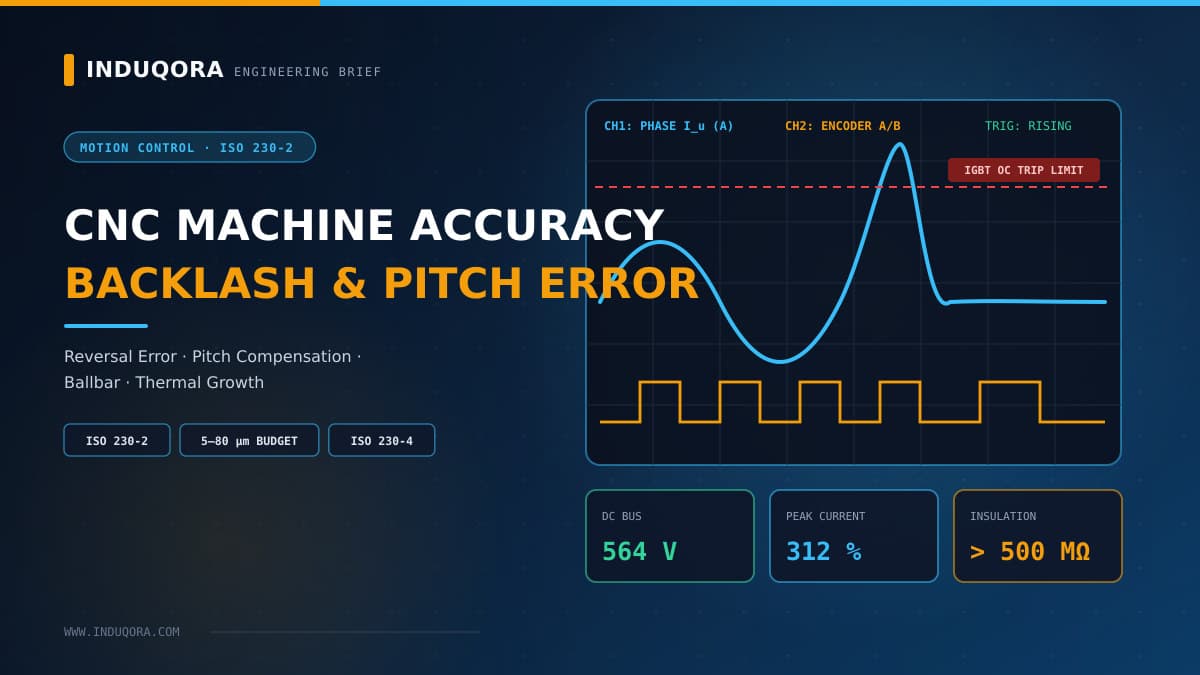
A positioning spec on a datasheet says little about what a machine does after ten years of cutting. This guide covers how to measure backlash, set pitch-error compensation, read a ballbar trace and validate the result against ISO 230-2.